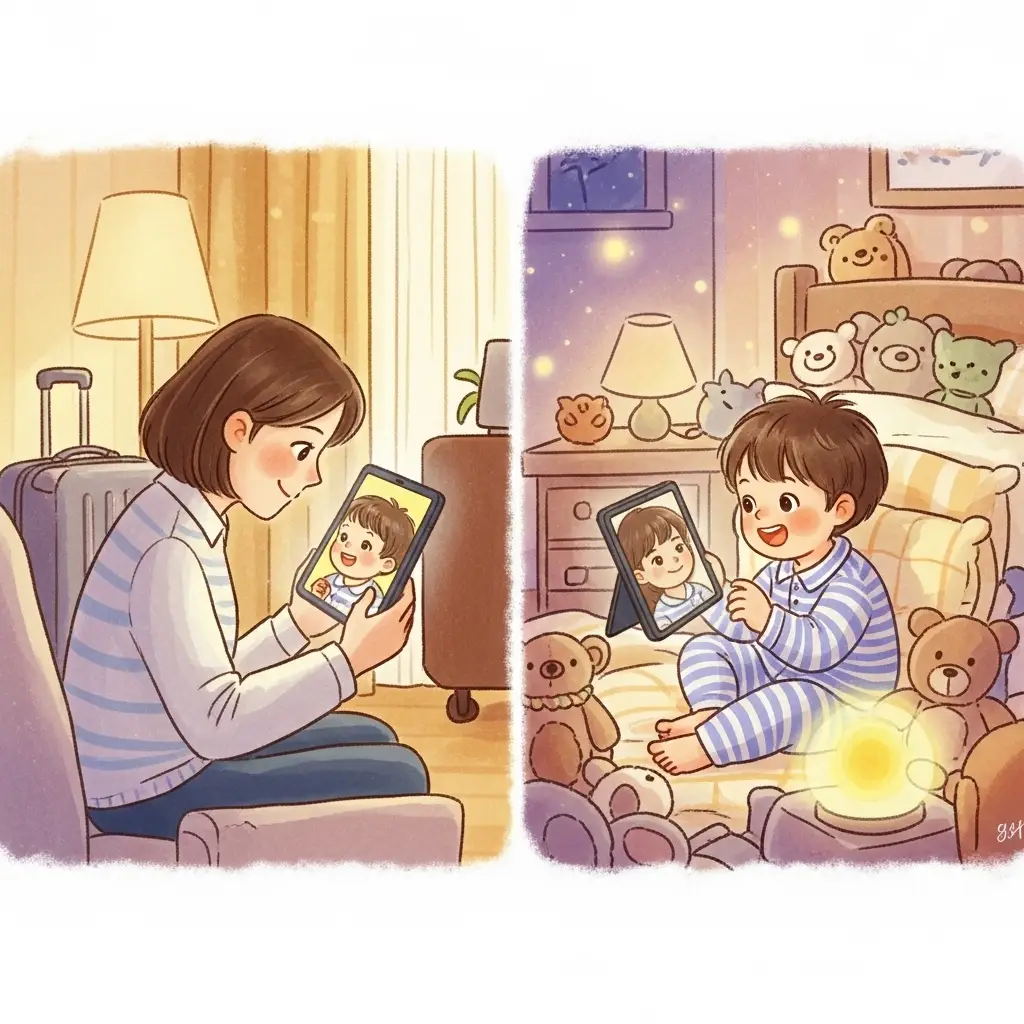
The taxi is waiting, your suitcase is packed, but your heart is still in the nursery. Every traveling parent knows that ache—the worry that miles will create emotional distance. But here’s the reassuring truth: physical absence doesn’t have to mean relational absence.
The Science of “Psychological Presence”
Source: Journal of Family Psychology
Research from the Journal of Family Psychology reveals that children primarily need “psychological presence” rather than physical proximity. When kids feel emotionally connected to a parent, their stress levels remain stable regardless of where that parent sleeps at night.
The key? Predictable, meaningful rituals that transcend geography.
“A child who knows Dad will call every night at 7 PM feels more secure than one whose physically-present parent is emotionally distracted.”
5 Proven Connection Strategies
1. The “Good Morning/Good Night” Ritual
Time zone challenges are real, but so is the power of bookending your child’s day. Record a brief voice message they can play upon waking or before sleep. Even a 30-second “I love you, and I’m thinking of you” activates oxytocin production.
2. Shared Storytime, Asynchronously
Source: American Academy of Pediatrics
The AAP emphasizes that hearing a parent’s voice during storytelling creates unique neural pathways. Use the HuggleTales voice recreation to narrate personalized stories that your child can enjoy while you’re in meetings across the globe. They hear your voice guiding them into dreamland.
3. The “Treasure Hunt” Connection
Before leaving, hide small notes or voice recordings around the house. Each day you’re away, text a clue leading to that day’s “message from Mom/Dad.” This gamifies your absence into an adventure.
4. Video Call Quality Over Quantity
Ten minutes of fully-present video interaction beats an hour of distracted multitasking. Use these golden rules:
- Eye level camera: Position your device so you’re looking directly at each other
- Shared activity: Read the same book simultaneously, or draw together on a shared digital canvas
- No background distractions: Your full attention is the gift
5. The “Countdown Calendar” Ritual
Children experience time differently than adults. A visual countdown (paper chain, sticker chart) transforms abstract “I’ll be back Thursday” into tangible progress they can see and touch.
Pre-Trip Preparation Matters
Source: Child Development Institute
Studies show that children cope better with parental absence when they’re prepared in advance:
- Explain the why: Even young children benefit from understanding that your travel supports the family
- Make the invisible visible: Show them on a map where you’ll be; use video tours of your hotel
- Create a “transitional object”: A scarf that smells like you, or a recorded story they can hold
The Homecoming Ritual
Don’t underestimate the importance of your return. A small tradition—special pancakes, a shared walk, or simply uninterrupted cuddle time—signals that your bond remains unbroken.
Distance as an Opportunity
Paradoxically, brief separations can strengthen attachment. They provide children with the experience of reunion—powerful proof that absence is temporary and love is permanent.
With HuggleTales, every night can still end with your voice, your stories, and your unique way of saying “I love you.” Because the strongest bridges aren’t built from presence alone—they’re built from intention.