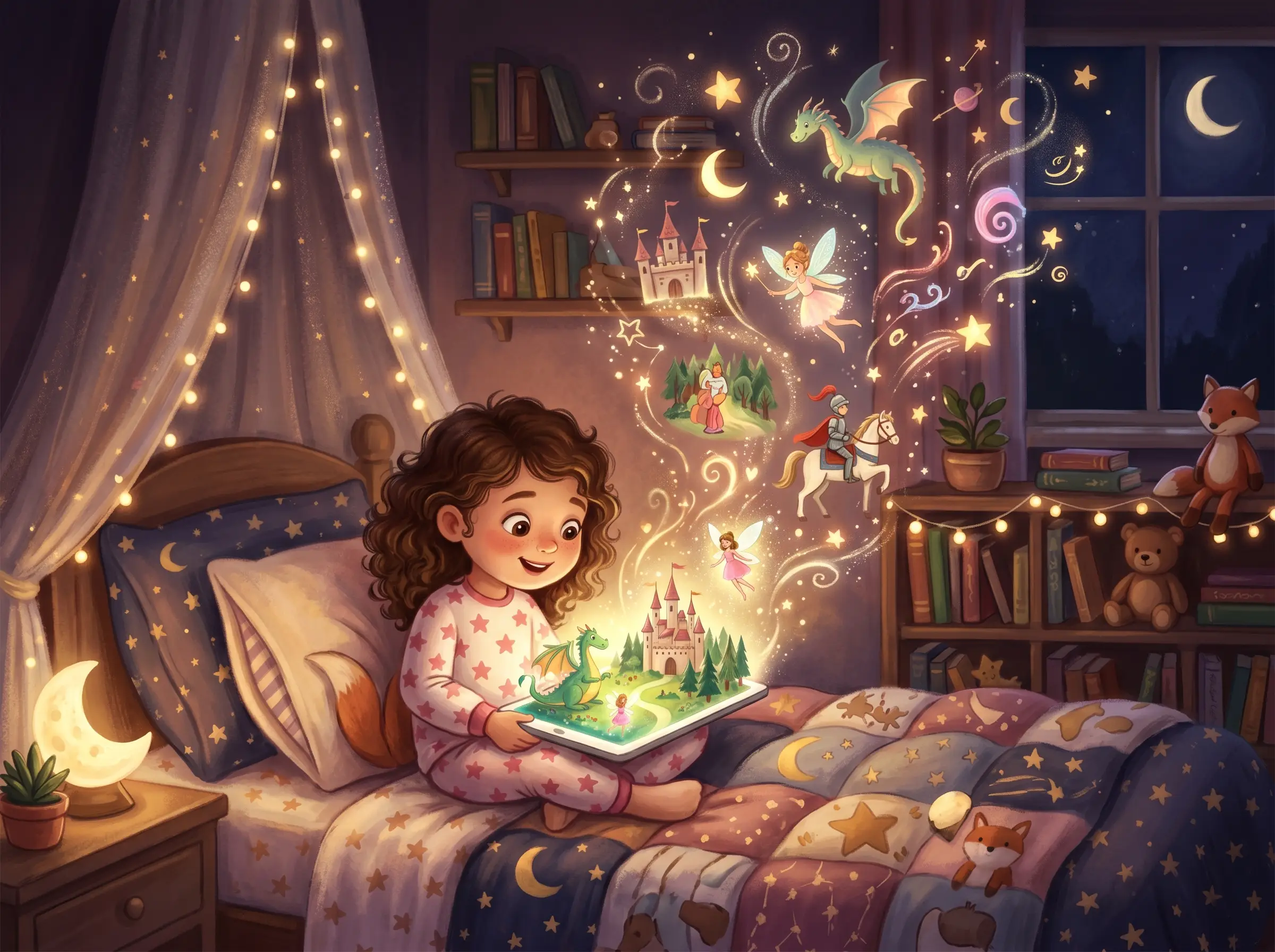
AI story generators for kids have exploded in the past two years. Type a prompt, get a story — sounds simple. But if you’ve tried a few, you’ve probably noticed a pattern: the first story is impressive. By the third, it feels hollow. By the tenth, your child has lost interest.
So what separates an AI story generator that actually works for kids from one that’s just a parlor trick?
What “AI Story Generator” Actually Means in 2026
At its most basic, an AI story generator takes a text prompt — “a story about a dragon who is afraid of fire” — and uses a large language model to produce a narrative. Most consumer apps are essentially wrappers around GPT-4 or Claude with a child-friendly interface.
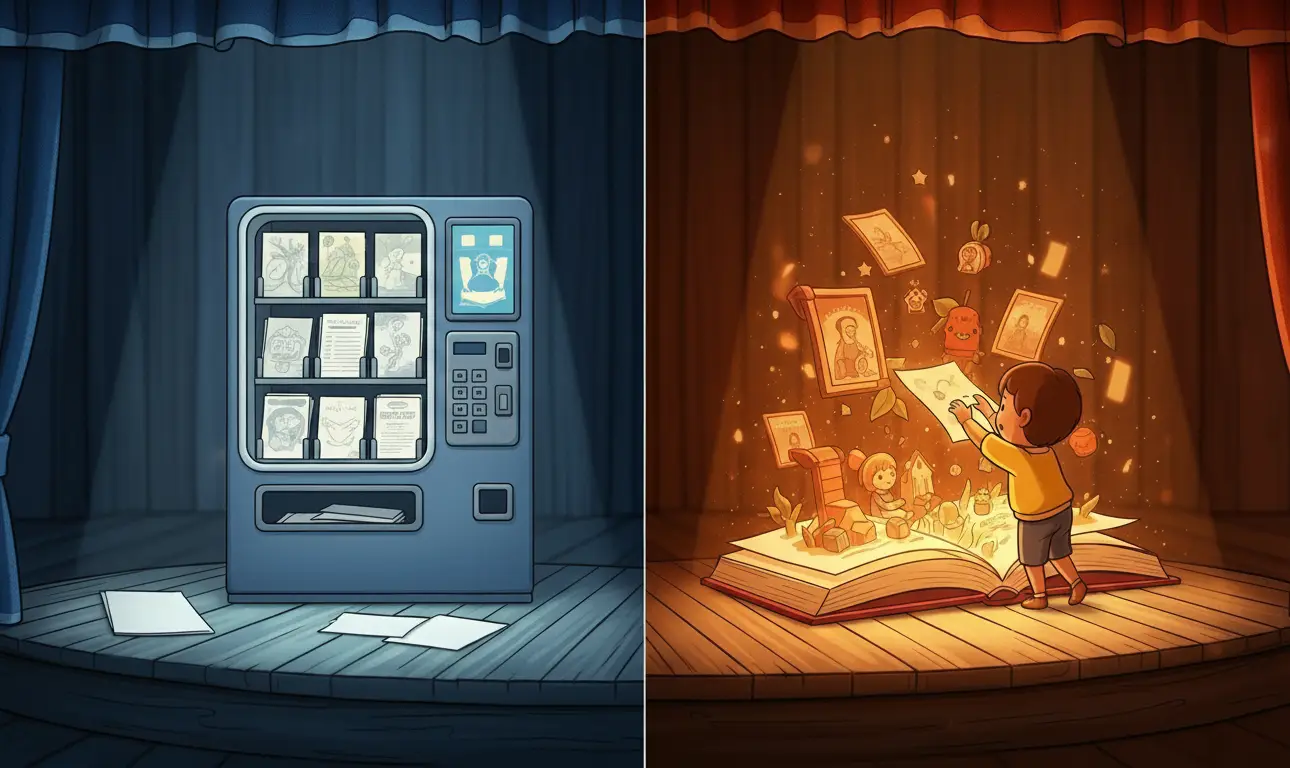
The problem is that these generic wrappers share the same fundamental weakness: they have no memory, no personalization, and no emotional connection to the child reading them.
A story about “a brave child” isn’t the same as a story about your child — with their name, their dog Bruno, their best friend Sofia, and their fear of thunderstorms. That distinction is everything.
The 5 Things That Make an AI Story Generator Actually Good for Kids
1. True Personalization (Not Just Name-Insertion)
The lowest tier of “personalization” is taking a template and inserting a child’s name. “Once upon a time, there was a child named Emma…”
Real personalization means the AI builds the story around the child’s world: their interests, their pets, their family members, their current fears and obsessions. The difference in engagement is dramatic — studies show children listen 40% longer to stories featuring familiar elements from their real lives.
2. Voice Narration in a Familiar Voice
Text on a screen is fine. But for children under 6, audio narration matters enormously — and the voice doing the narrating matters even more.
A story narrated in a stranger’s voice — even a warm, pleasant one — produces a measurably different neurological response than a story narrated in a parent’s or grandparent’s voice. The familiar voice triggers oxytocin release and cortisol reduction. The stranger’s voice doesn’t.
The best AI story apps in 2026 use neural voice synthesis to narrate stories in the voice of someone the child loves — not a pre-set narrator.
3. Story Memory and Continuity
Children don’t want a new story every night in isolation. They want continuing adventures — the same characters growing, learning, changing. This requires the AI to maintain story memory across sessions.
Most basic story generators start from scratch every time. The best apps build a persistent story universe for each child that evolves over weeks and months.
4. Age-Appropriate Content and Length
A 2-year-old and a 7-year-old need completely different stories. Length, vocabulary, complexity, emotional themes — all of these should adapt to the child’s age. Generic AI generators don’t do this. Purpose-built kids’ story apps do.
5. Privacy and Child Safety
This one is often overlooked. When you give an app your child’s name, interests, and voice data, where does that information go? The best apps process data on their own servers — not third-party AI clouds — and have clear, enforceable child data policies.
How HuggleTales Approaches AI Story Generation
HuggleTales was built specifically around the idea that an AI story generator should feel like a family member — not a tech product.
The app runs its AI on self-hosted servers (no OpenAI, Google, or Amazon in the data chain), generates stories uniquely tailored to your child’s world, and narrates them in the cloned voice of a parent or grandparent — recorded in just 15 seconds.
What makes it different from other AI story generators:
- Voice cloning without an app download — grandparents can record their voice via a magic link, no tech skills required
- Family voice library — multiple family members can each record their voice, giving children a rotating cast of beloved narrators
- Unique AI illustrations — every story gets its own generated artwork, not recycled stock images
- Available in 10 languages — including English, Japanese, Korean, and Simplified Chinese
The result is that children don’t experience HuggleTales as an “AI app.” They experience it as Grandma reading me a story about my dog and my trip to the beach last week.
What to Look for When Choosing an AI Story Generator for Your Kids
Ask these questions before subscribing:
- Does it use my child’s real name and details — or just fill in a template?
- Who narrates the stories — a stranger, a celebrity, or someone my child loves?
- Does it remember previous stories, or start from scratch every time?
- Where does my child’s data go? Is it processed by third-party AI providers?
- Can it adapt to my child’s age, interests, and attention span?
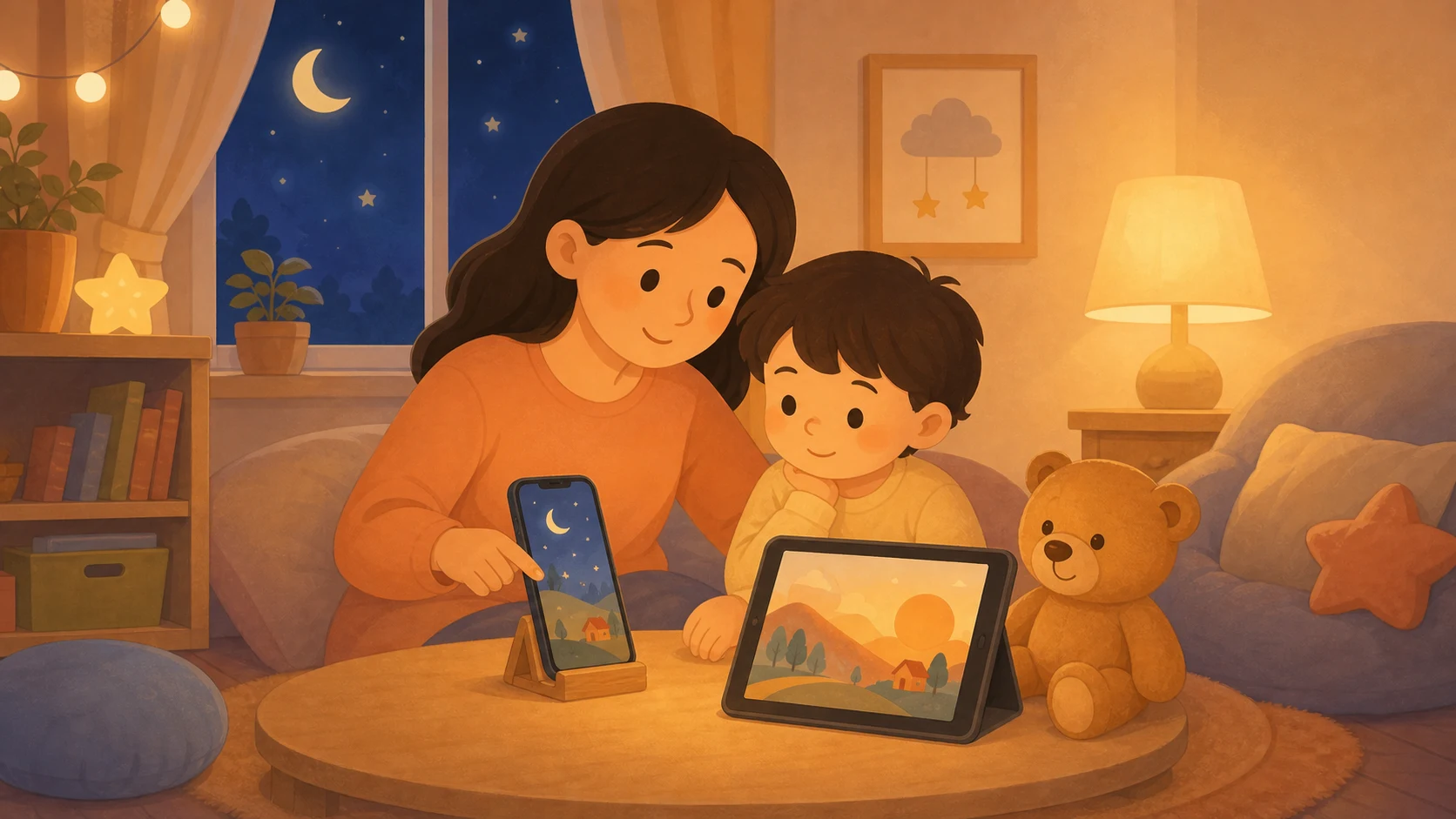
The AI story generator market in 2026 is crowded. But the apps that keep families coming back night after night are the ones that understand this: the goal isn’t to generate a story. The goal is to create a bedtime ritual that your child asks for — one that makes them feel seen, loved, and safe enough to fall asleep.
HuggleTales generates personalized bedtime stories narrated in your voice. Your first story is free →