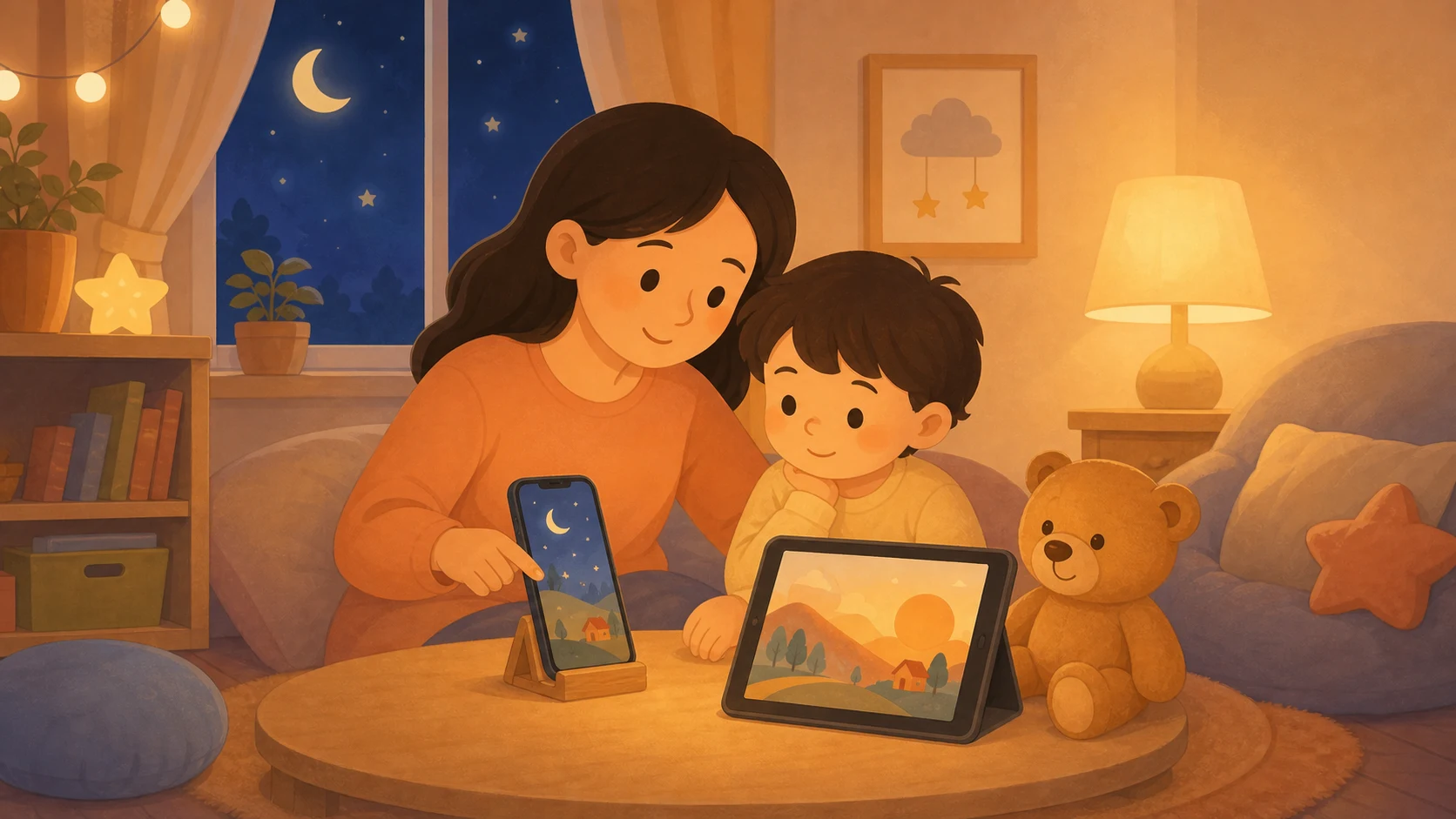
Choosing between a phone and a tablet for your child can feel like a bigger decision than it should. A phone is easy to carry and always nearby. A tablet offers a larger, more comfortable view. Both can support meaningful family storytime—and both can become distracting when the experience is not set up thoughtfully.
So which one is better?
The honest answer is that the best device depends less on screen size and more on where, when, and how your family plans to use it. Here is a practical way to decide without turning the choice into another parenting debate.
The quick answer
Choose a phone when portability, audio listening, and short moments on the go matter most.
Choose a tablet when you want to sit together, enjoy illustrations, or give your child more room to interact without holding a small screen close to their face.
Many families will find that the best answer is not one or the other. It is a simple combination: a tablet for shared storytime at home and a phone for listening while travelling.
When a phone works well
A phone is often the most convenient option because it is already part of everyday family life. There is no additional device to charge, pack, or remember.
A phone may be the better fit when:
- You mainly want to listen to stories rather than watch the screen.
- You use stories during car rides, flights, or visits away from home.
- A parent will remain in control of the device.
- Storytime happens in short, spontaneous moments.
- You want something that fits easily on a bedside table.
For audio-first stories, the smaller screen can actually be helpful. Once the story begins, the phone can rest on a stand or be placed safely out of reach. Your child can focus on the narration, imagine the world of the story, and cuddle up with you instead of holding the device.
The main drawback is that a phone is designed for many things at once. Messages, calls, and notifications can interrupt a calm moment unless you silence them first. A small display can also feel cramped when two or more people want to look at illustrations together.
When a tablet works well
A tablet creates a more spacious shared experience. Children can see illustrations without leaning towards a small screen, and parents can sit beside them rather than passing a phone back and forth.
A tablet may be the better fit when:
- You regularly explore stories together as a family.
- Illustrations are an important part of the experience.
- Your child likes helping choose characters, settings, or story ideas.
- More than one child will join storytime.
- The device mostly stays at home.
The larger screen makes a tablet especially useful for collaborative moments. A child can point to an image, choose between options, or help create a story while the parent remains involved.
The trade-off is that a tablet is less portable and can feel more like a personal entertainment device. Clear routines help: decide where it lives, when it is used, and what happens when storytime ends.
Phone vs. tablet at a glance
| What matters to your family? | Phone | Tablet |
|---|---|---|
| Easy to carry | Excellent | Good |
| Audio-only listening | Excellent | Excellent |
| Looking at illustrations together | Limited | Excellent |
| Using it with multiple children | Limited | Better |
| Travel and waiting times | Excellent | Good |
| Creating stories together | Possible | More comfortable |
| Bedside space | Minimal | Requires more room |
Think about your child’s age—but do not treat it as a rule
Age can guide the decision, but every child and family is different.
For toddlers, the simplest experience is often the best. A parent-controlled phone playing an audio story can keep the focus on listening and closeness. If you want to explore illustrations together, a tablet may be easier because your child does not need to hold it close.
Preschool and early-school-age children may enjoy taking a more active role. A tablet gives them space to select ideas, notice details, and help shape a story. The important part is that the larger device does not quietly turn shared storytime into solo browsing.
Older children may prefer choosing or creating stories independently. At that stage, device rules, content boundaries, and a clear stopping point matter more than whether the screen is five or ten inches wide.
For bedtime, setup matters more than size
Neither device automatically creates a calm bedtime routine. The way you use it makes the difference.
Before the story starts:
- Silence calls, notifications, and app alerts.
- Lower the brightness to a comfortable level.
- Place the device on a stable stand instead of handing it over.
- Choose the story before getting into bed.
- Agree on a clear ending: one story, then the device goes away.
Try treating the device like a music player or storybook—not an open doorway to every app it contains. When the story ends, put it aside and keep the final minute for a cuddle, a question about the adventure, or a quiet goodnight.
Five questions that make the choice easier
Still unsure? Ask yourself:
- Will we mostly listen, look, or create together?
- Will we use it mainly at home or while travelling?
- Does one child use it, or will siblings join?
- Can the device stay in a fixed place during storytime?
- Which option makes it easiest for a parent to stay involved?
Your answers usually reveal the right choice quickly.
A hybrid approach may be the most realistic
You do not need to commit your family to one device forever. Different situations can call for different tools.
You might create a personalised story together on a tablet in the afternoon, then listen to it from a phone at bedtime. On a family trip, the phone may be all you need. On a rainy Sunday, the tablet might make it easier for siblings to invent a new adventure together.
Consistency does not have to mean using the same device every time. It can simply mean keeping the same family rules: stories first, distractions off, grown-ups involved, and a clear ending.
The best device is the one that brings you closer
A phone wins on convenience. A tablet wins on shared viewing and creative space. But neither is the real heart of storytime.
The meaningful part is the familiar voice, the child who recognises themselves in the adventure, and the small ritual you build together. Choose the device that supports that connection with the least friction for your family.
HuggleTales is coming to Android, and we are designing the experience for both phones and tablets.