From the first moments of life, babies show a remarkable preference. Amidst the symphony of sounds in a hospital nursery, they turn toward one voice above all others: their mother’s. This isn’t sentiment—it’s sophisticated neuroscience.
The Auditory Imprinting Window
Source: Proceedings of the National Academy of Sciences
Research published in PNAS reveals that fetal hearing begins around 24 weeks gestation. During the third trimester, babies actively listen and learn, with their brains showing distinct neural responses to their mother’s voice compared to strangers—even before birth.
This prenatal exposure creates what scientists call “auditory imprints”—neural pathways that recognize and prioritize specific vocal signatures.
“A mother’s voice is the original sound of safety. The brain encodes it as a biological signal of protection.”
The Amygdala Connection
Source: Stanford University School of Medicine
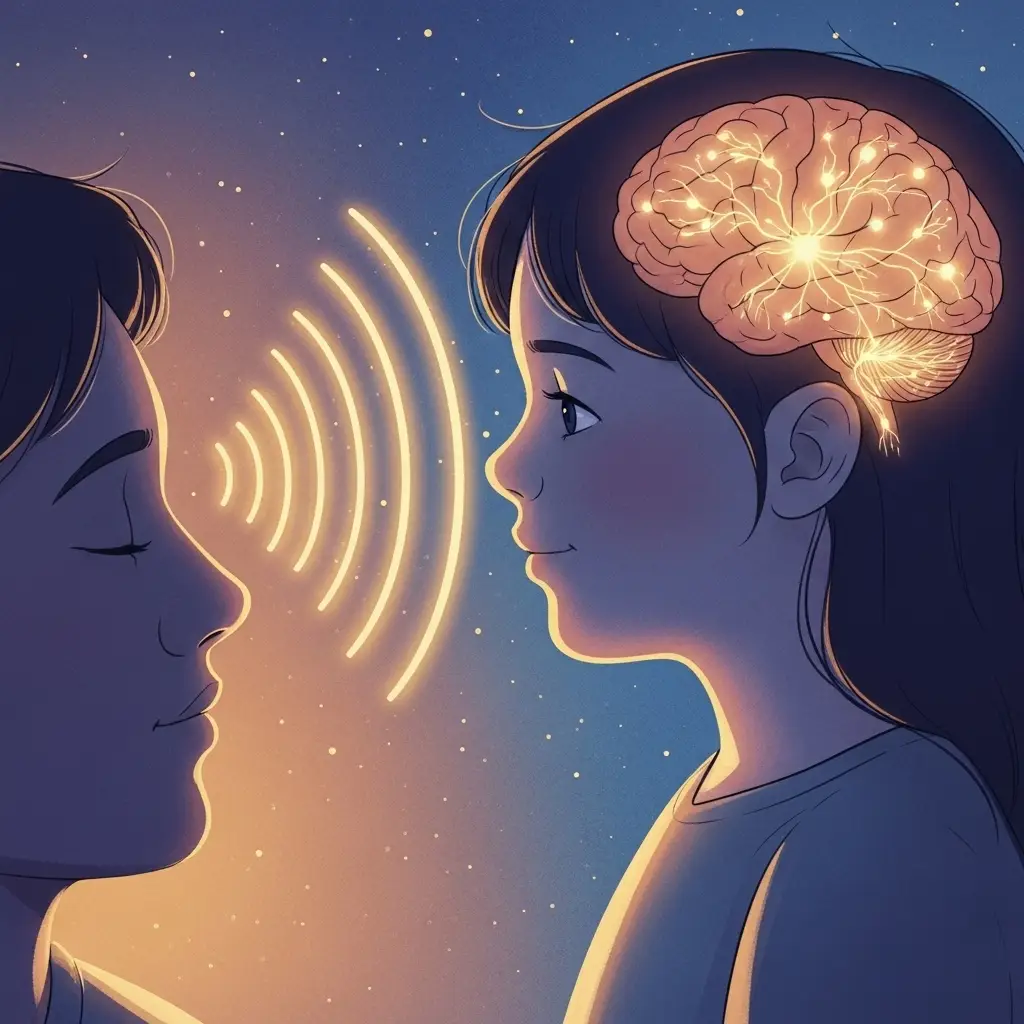
MRI studies from Stanford have mapped exactly what happens when children hear a familiar voice. The amygdala—the brain’s threat-detection center—shows reduced activity, while the prefrontal cortex (responsible for executive function) lights up.
Translation: A parent’s voice literally soothes the brain’s alarm system while activating its learning centers.
Voice Recognition vs. Face Recognition
Interestingly, children recognize and respond to voices earlier and more consistently than faces. While facial recognition requires complex visual processing, voices carry:
- Prosody (rhythm and intonation) that conveys emotion instantly
- Familiar frequency patterns that trigger comfort responses
- Unique vocal fingerprints processed by specialized brain regions
Studies show that children as young as 4 months can distinguish their father’s voice from other male voices, even when presented through low-quality audio.
Cortisol and the Calm Response
Source: Developmental Psychobiology Journal
When researchers measured cortisol (stress hormone) levels in children during separation scenarios, they found something remarkable: simply hearing a parent’s recorded voice reduced cortisol levels by up to 28%—nearly as much as physical presence.
This explains why phone calls from a traveling parent can transform a meltdown moment into manageable emotion.
The “Voice Memory” Phenomenon
Long after a parent passes, their voice remains neurologically significant. Adults who hear recordings of deceased parents show activation in the same brain regions associated with current relationships. The voice becomes a permanent part of the neural architecture of attachment.
Practical Applications for Parents
Understanding this science empowers you to use your voice strategically:
For Bedtime
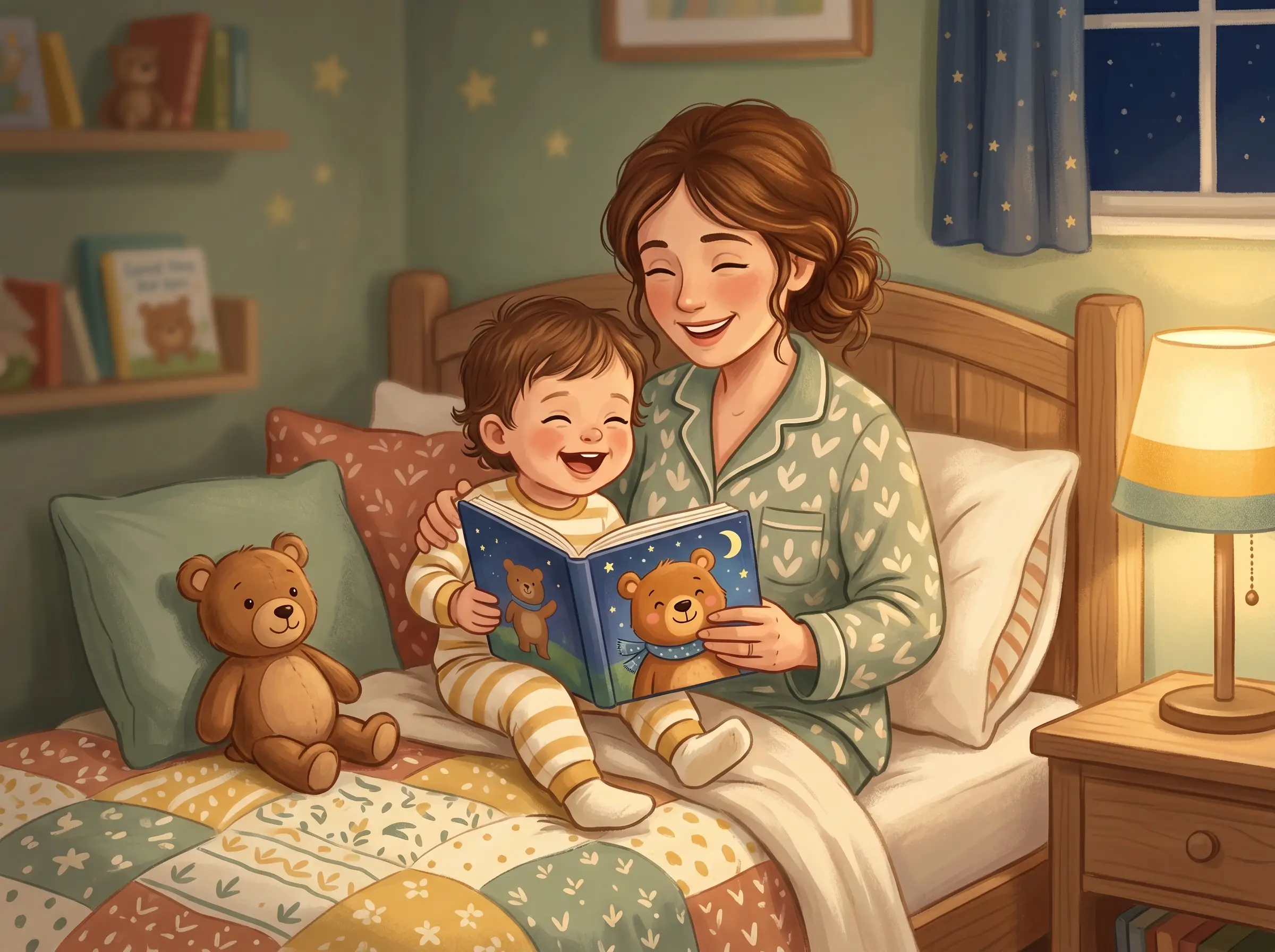
Create consistent verbal routines. The specific words matter less than the familiar cadence and tone. “Sleep tight, don’t let the bedbugs bite” becomes a neural trigger for relaxation.
For Separation Anxiety
Pre-record everyday messages—not just special occasion stories. A simple “I’m thinking about you and I’ll see you soon” heard in your voice carries more weight than a text message ever could.
For Learning Moments
Read aloud regularly. The combination of your familiar voice with new vocabulary creates optimal learning conditions—safety paired with stimulation.
Preserving Voices for the Future
Source: Memory and Cognition Journal
Modern families face a unique challenge: we document everything visually but rarely preserve the sound of our voices. Yet research suggests that voice recordings may be more emotionally evocative than photographs over time.
The HuggleTales voice recreation technology addresses this gap, allowing parents to create a lasting vocal presence that can narrate stories for years to come. It’s not just about convenience—it’s about preserving a neurological bridge between parent and child.
The Bottom Line
Your voice is more than communication. It’s a biological tool for regulation, connection, and comfort that your child’s brain is specially wired to receive. In a world of increasing visual stimulation, never underestimate the power of simply being heard.