The light goes off, the curtain makes a shadow, and your child is suddenly wide awake. Fear of the dark is not bad behaviour. It is imagination, tiredness and the need for closeness all arriving at the same time.
For parents this can feel difficult. You want to comfort your child, but you do not want every night to become a new discussion. The answer is a small plan that stays calm, repeatable and kind.
Why the dark feels different for children
Source: Harvard Center on the Developing Child
Preschool and early primary school children are still learning the line between imagination and reality. During the day this is wonderful. It helps them play, invent and tell stories. At night, when the room is dark and the body is tired, the same imagination can feel threatening.
The goal is not to prove that “nothing is there”. The goal is to show the nervous system: this room is safe, the routine is familiar, and I know what happens next.
“Children calm down faster when safety is not only explained, but experienced.”
The common mistake: too much debate
When a child says “Something is there”, many parents start a long inspection. Wardrobe open, under the bed, curtain moved, every sound explained. It may help for one evening. But it can also teach the child that maybe there really is something that must be checked.
A shorter pattern works better:
| Situation | Calm answer |
|---|---|
| Shadow on the curtain | ”That is the curtain. You are safe.” |
| Noise in the hallway | ”That was the house. I am near.” |
| One more question | ”I heard you. Now it is sleep time.” |
The 10-minute plan
Source: American Academy of Pediatrics
A bedtime routine works because it is predictable. With fear, predictability is more powerful than perfect words. Keep the sequence small:
- Check the room together, briefly
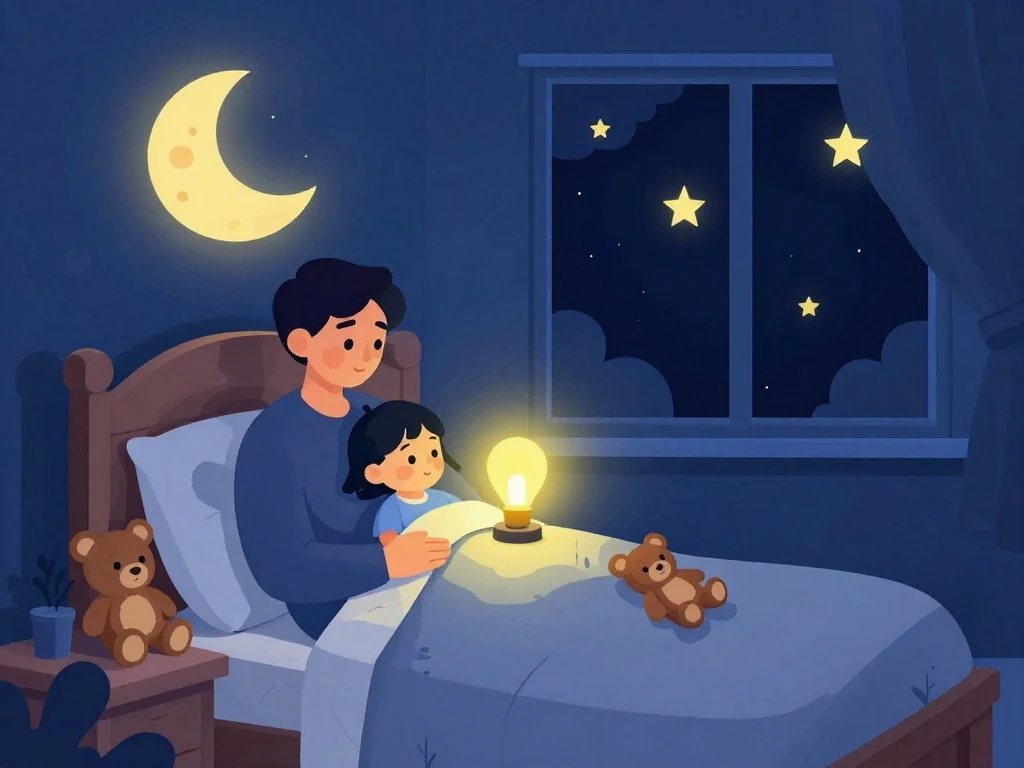
- Set the night-light to the same brightness
- Put the stuffed animal guard in the same place
- Take three slow breaths
- Repeat one brave sentence
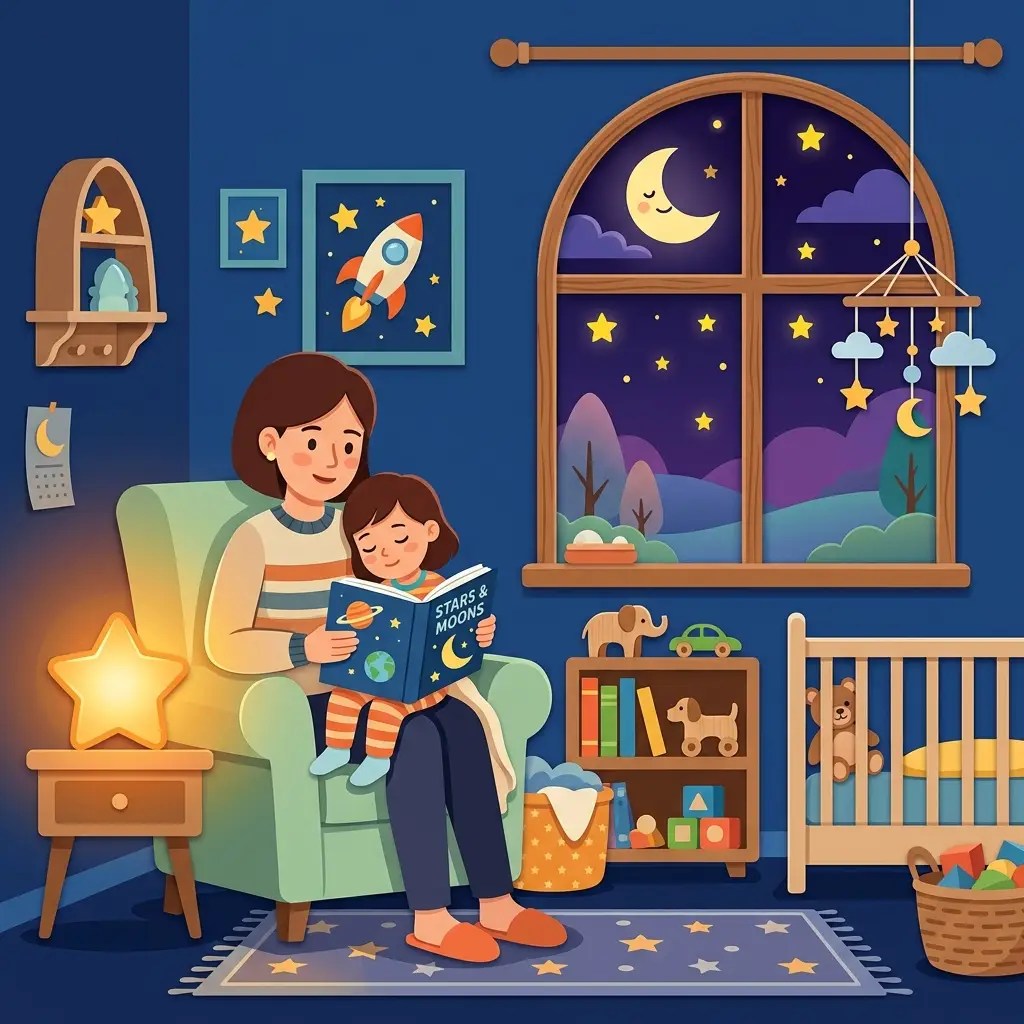
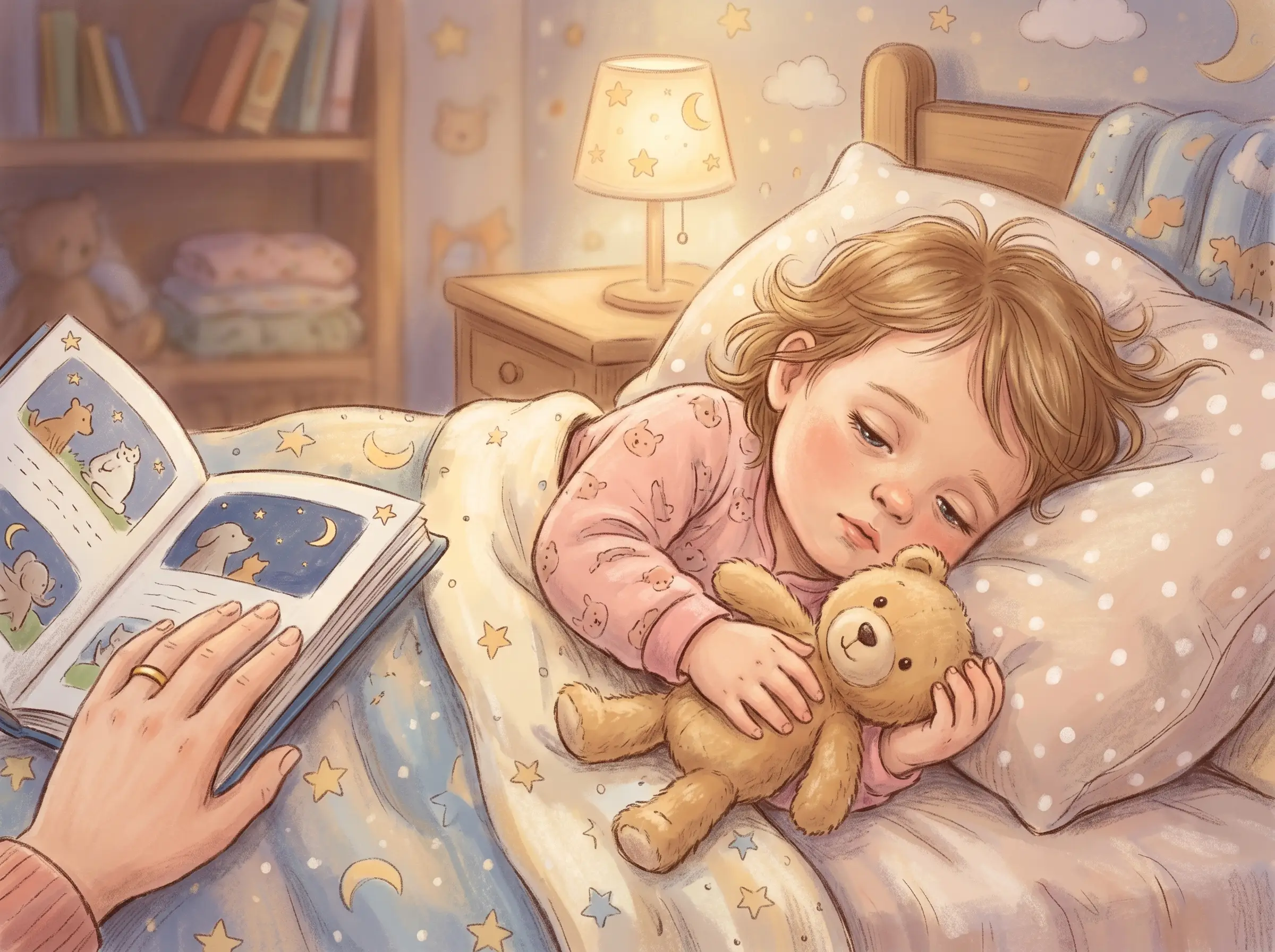
- Read or listen to a short calm story
- End with the same closing phrase
The important part is not the length. It is the repetition.
Stories help children reshape fear
Source: UCLA Department of Psychology
Children often process feelings indirectly. When a character in a story feels afraid, the child can see solutions without feeling exposed. It becomes even stronger when the child is the brave main character. They do not have to defeat the dark. They learn that they can become calm.
HuggleTales fits this moment because parents can create a new story every night with familiar helpers: night-light, stuffed toy, bedroom, child’s name. The adventure stays fresh, but the safety signals stay familiar.
Practical tips for tonight
- Use one calming sentence and keep it the same.
- Do not renegotiate the night-light every evening.
- Do not turn monster-checking into a game.
- Praise courage in the morning, not a perfect night.
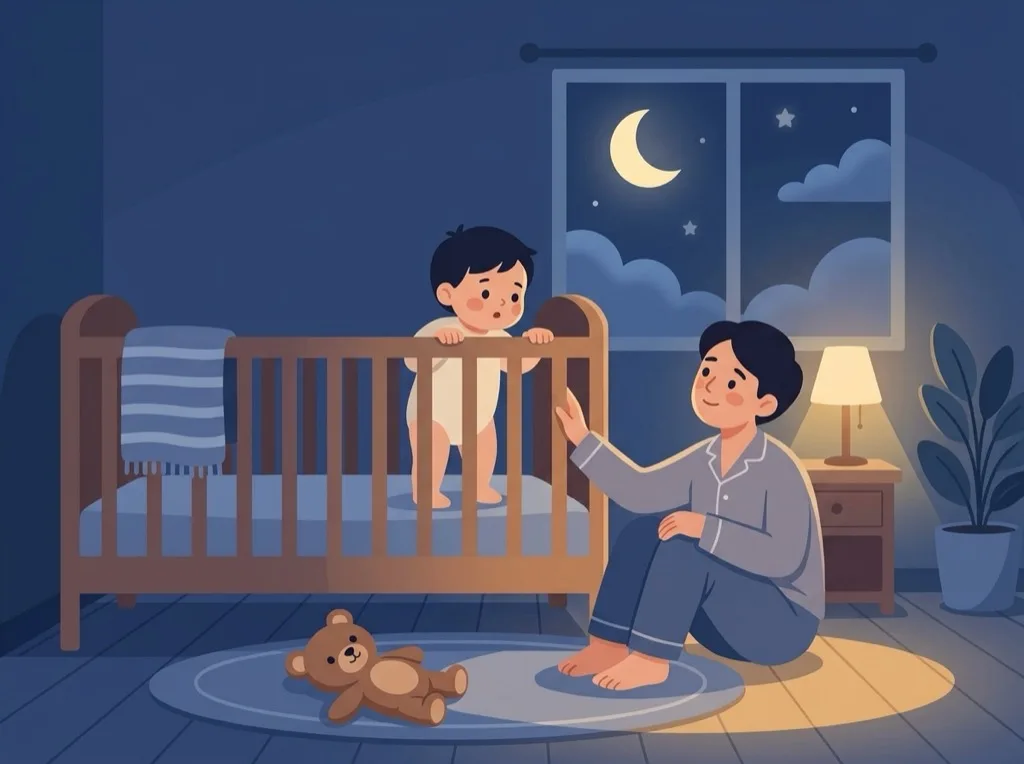
- If your child calls again: go in briefly, quietly, and repeat the same words.
When to look closer
If fear starts very suddenly, becomes stronger over weeks, affects daytime life or comes with serious sleep disruption, talk to a paediatrician. This article is not medical advice. For many families, fear of the dark is a normal developmental phase that responds well to warmth and structure.
Night does not need to be perfect. It only needs to become reliable enough that your child can feel: I am safe, even when it is dark.
HuggleTales helps families create a new personalised bedtime story every night, with familiar characters and calm endings. Your first story is free →