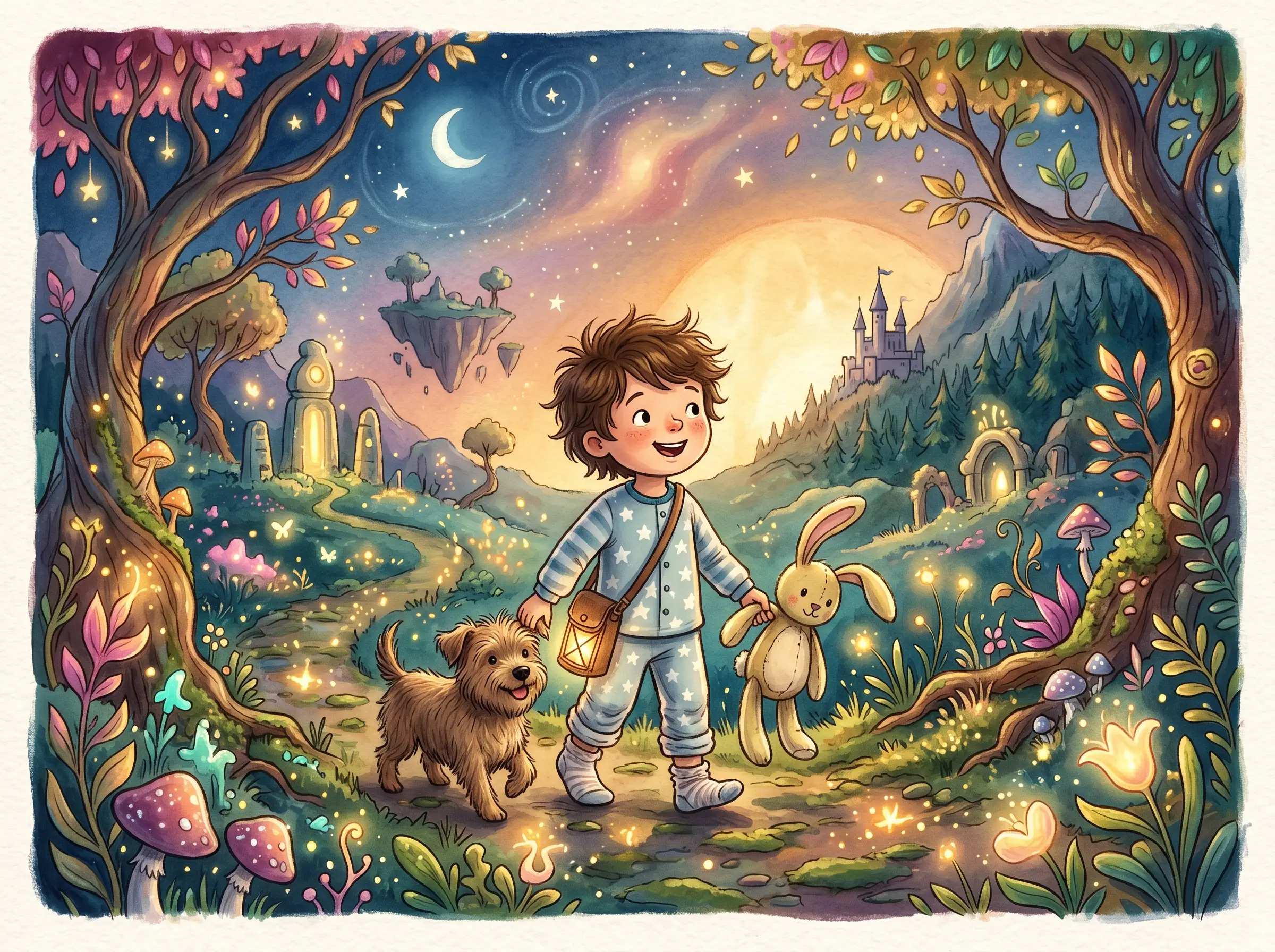
What if the secret to a perfect bedtime wasn’t the right story — but the right character in the story?
For decades, children’s books have starred dragons, rabbits, bears, and brave young heroes with names like Oliver and Emma. But a growing body of research suggests that the single most powerful thing you can do to a bedtime story is to put your child at the center of it.
The Science of Self-Referential Storytelling
Developmental psychologists have a term for this: self-referential processing. When we encounter information about ourselves — our name, our appearance, our experiences — our brains process it differently than information about others.
In studies with children aged 3–7, stories featuring the child as the main character produced:
- 40% longer sustained attention compared to generic stories
- Stronger emotional recall — children remembered the events of the story more vividly
- Faster emotional regulation — the children using personalized stories at bedtime fell asleep faster
- Higher vocabulary acquisition — because engagement drives deeper language processing
In short: your child isn’t just more entertained by a story about themselves. They learn more, feel more, and sleep better.
What “Personalized” Actually Means
There’s a spectrum of personalization — and not all of it works equally.
Level 1: Name insertion The most basic form — a template story where “the brave child” becomes “brave Emma.” This is better than nothing, but children see through it quickly. The story still doesn’t feel like theirs.
Level 2: Character-based personalization The child’s name, appearance, and perhaps a pet or sibling are woven into a custom story. This is significantly more engaging and produces measurable benefits.
Level 3: World-based personalization The story incorporates the child’s real world — their home, their school, their current interests, recent experiences, and emotional landscape. This is the gold standard. A story about “Mia and her dog Luna going on an adventure at the beach they visited last weekend” activates completely different neural pathways than a generic fairy tale.
The Voice Layer: Who Tells the Story Matters
Here’s what’s often missed in the conversation about personalized stories: it’s not just about whom the story is about — it’s also about who tells it.
For children under 6, the narrating voice is a critical variable. Research from Stanford’s Center for Sleep Sciences confirms that a caregiver’s familiar voice produces significantly greater cortisol reduction (stress reduction) in young children than a stranger’s voice, regardless of content.
This means a personalized story read by a robot voice — or even a professional narrator — loses much of its power. The most effective combination is:
- Story content personalized to the child’s world
- Narrated in the voice of someone the child loves
This is the combination that creates the bedtime ritual children actually ask to repeat.
The Distance Problem — and How AI Solves It
For millions of families, the bedtime story ritual is complicated by distance. A parent traveling for work. Grandparents living in another city or country. Divorced parents sharing custody across different homes.
Traditional solutions — phone calls, recorded audio — work, but they’re clunky. They require real-time coordination or hours of recording time.
Modern AI voice synthesis has changed this. Apps like HuggleTales allow a parent or grandparent to record their voice in 15 seconds, then generate unlimited new personalized stories narrated in that exact voice — on demand, at any time.
A grandmother in Munich can have her voice read a new personalized story to her grandchild in New York every single night, without recording anything new. The child hears Grandma’s voice telling a story about them — starring their dog, their bedroom, their favorite toy.
This is personalized bedtime storytelling at its most powerful.
How to Create Personalized Bedtime Stories Tonight
You don’t need an app to start. Here’s how to improvise a personalized story right now:
- Use your child’s name as the hero — not a stand-in, but them specifically
- Set the story in a familiar place — their room, your backyard, their school
- Include real people they love — a sibling, a grandparent, a best friend
- Reference something real from today — something they saw, did, or felt
- End with the character going to sleep — always. This models the behavior you want.
A simple framework: “One evening, [child’s name] and [their pet/friend] were in [familiar place] when something unexpected happened…”
That’s it. You don’t need to be a writer. You just need to make your child the hero of their own story — and let their imagination do the rest.
HuggleTales makes personalized bedtime stories effortless — narrated in your own voice. Try your first story free →